Sign in. It’s quick, free and it’s up to you.
An account is an optional way to support the work we do. Find out more.
Sign in. It’s quick, free and it’s up to you.
An account is an optional way to support the work we do. Find out more.

The FOI Files is a series from our team at The Journal Investigates. Each week, one of our investigative journalists brings you inside the fight for information that we’re all entitled to. They’ll share their documents, their stories – and tips on how to take the journey for yourself.
This week’s file is from investigative journalist Conor O’Carroll.
See here for The Journal Investigates’ most recent investigations.
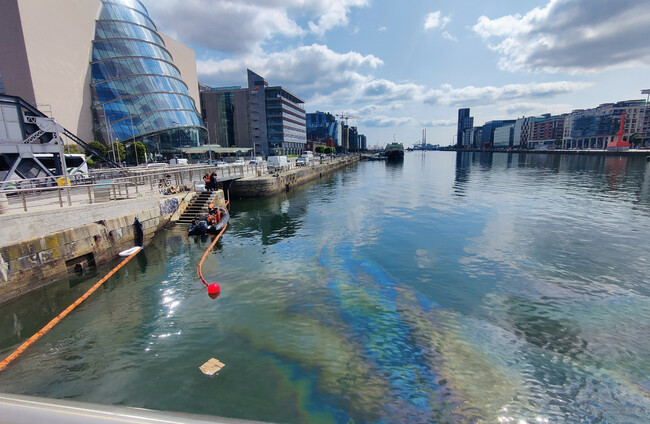
YOU MAY RECALL a story covered by The Journal back in May about how diesel has been leaking into the River Liffey from an underground pipe connection near the Samuel Beckett Bridge for over a year.
When I first learnt about this story, I knew that I had to send a Freedom of Information request to the public bodies involved with the response to the leak.
And so that’s exactly what I did, requesting all records held by Dublin City Council on how they discovered the leak and their work to contain it.
The released records show that it was actually a Dublin City Council official who first raised the alarm, noticing a “fuel spillage film” on the water on 11 March 2025.
“The rainbow film stretches past Wood Quay DCC Civic offices in either direction,” the official wrote in an email to the council’s water pollution team.
These offices are 2km west of the Samuel Beckett Bridge, which means that the spill spread a substantial distance before it was discovered. The official added:
The effects this spillage can have on the wildlife and environment can have far-reaching effects as there have been sightings of otters in the river.
A member of the public contacted the council a week later to report a large spill around the Ha’penny Bridge. Another added that the spill covered the width of the river near the Talbot Memorial Bridge.
Along with the records, Dublin City Council sent a number of photos of the leak, but instead of being attached as individual files, they were scanned and inserted into a document.
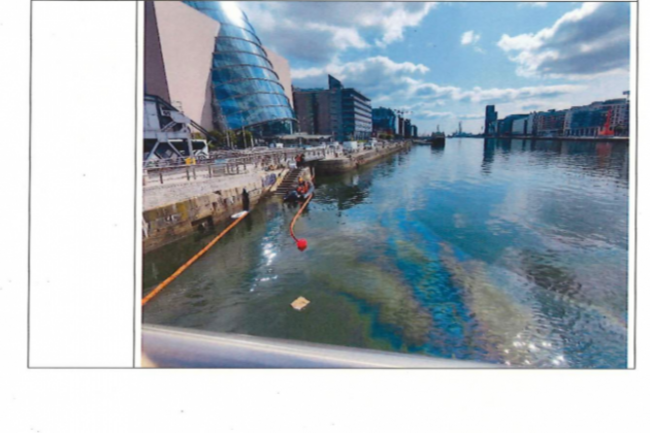
Naturally, this meant that the image quality was significantly reduced, and it actually gets to an important part of the wording of my original request.
As part of my request, I asked “to receive this information electronically, preferably in its original format”.
I specifically include this aspect in every request I send for exactly this reason. To ensure that the files I receive are in the same format as they are held by the FOI body.
If I wanted a spreadsheet full of data, for example, it would be a lot easier to work with if I received an actual spreadsheet, rather than a scanned version.
Sometimes it’s followed; other times, like in this case, it was not.
And while it isn’t always the most important thing, it’s worth including just in case.
Often, as it was in this case, the original files weren’t attached as they would have been too large to send over email, but after asking the decision maker, copies of the photos were sent using a file share service.
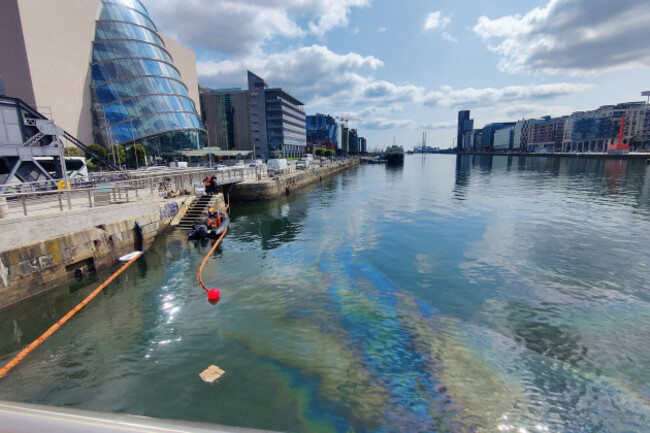
The images show how far the diesel had spread out into the wider river before sufficient floating pontoon barriers were put in place around the source.
Eagle-eyed readers may also recall that it was an underground pipe connection owned by Irish Rail that was the source of the leak.
Rest assured that I also sent a request to Irish Rail, but a third-party consultation involving the company contracted to clean up the spill and an understaffed FOI office have led to significant delays with that request. Stay tuned for more.
If you have a burning FOI question about how to get certain records or why your request was refused, you can get in touch with our team at investigates@thejournal.ie. The Journal Investigates team will be back with another instalment of The FOI Files next Tuesday.

To embed this post, copy the code below on your site














have your say